
GPT-5 Forex Trading Bots: Navigating the 2026 Financial Landscape
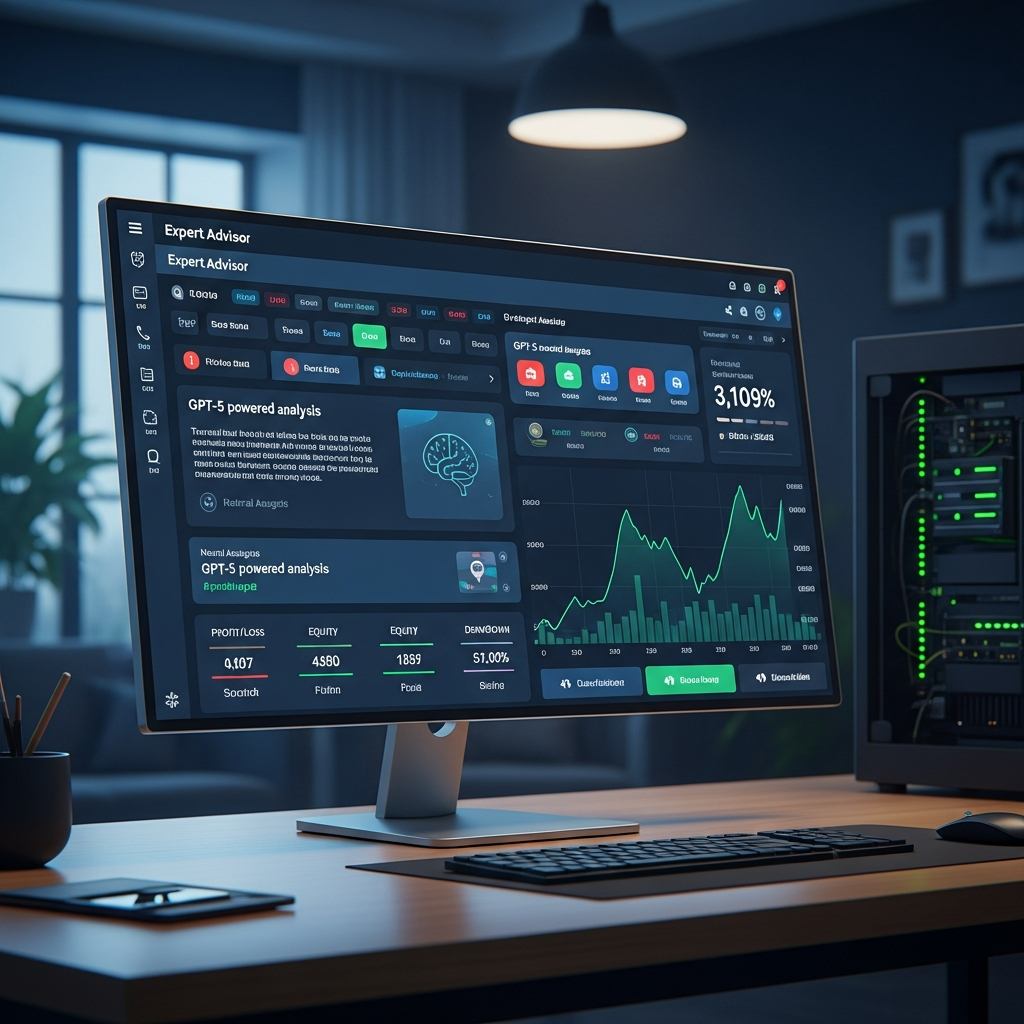
The Evolution of Intelligence in Currency Markets
The landscape of the foreign exchange (Forex) market has undergone a seismic shift over the last decade. We have moved from manual chart analysis to basic algorithmic ‘expert advisors,’ and finally, to the current era of generative intelligence. As we navigate through 2026, the integration of GPT-5 into trading bots has become the gold standard for both retail and institutional traders. This transition represents more than just a marginal improvement in speed; it is a fundamental change in how financial data is interpreted and acted upon.
For years, trading bots relied on static rules—if the Relative Strength Index (RSI) crossed a certain threshold, the bot would buy or sell. While effective in trending markets, these systems often failed during periods of high volatility or unexpected geopolitical shifts. The emergence of GPT-5 has solved the ‘context gap.’ By leveraging advanced reasoning capabilities, these new bots do not just see a price spike; they understand the ‘why’ behind it by processing global news, central bank transcripts, and social media sentiment in real-time.
Understanding GPT-5 Integration in Trading
To understand why GPT-5 is a game-changer for Forex, we must look at its core architecture. Unlike previous iterations, GPT-5 was designed with a focus on ‘System 2’ thinking—a psychological term for slow, deliberate, and logical reasoning. In the context of a trading bot, this means the AI can cross-reference multiple data streams before executing a trade, significantly reducing the ‘hallucinations’ or erratic behaviors seen in earlier AI models.
The Power of Multimodal Processing
In 2026, a GPT-5 integrated bot isn’t just reading text. It is multimodal. It can analyze live video feeds from financial news networks, interpret complex economic charts, and listen to the tone of a Federal Reserve Chair’s speech. In the Forex market, where a single word change in a policy statement can move the EUR/USD pair by hundreds of pips, this ability to grasp nuance is invaluable. The bot creates a holistic view of the market that traditional quantitative models simply cannot match.
Reasoning-Based Risk Management
Perhaps the most significant advantage of GPT-5 integration is the evolution of risk management. Traditional bots use fixed stop-losses. A GPT-5 bot, however, calculates risk dynamically. If the AI detects that a sudden price movement is due to a liquidity vacuum rather than a fundamental shift, it can adjust its exposure or wait for the ‘noise’ to settle. This level of discretionary-like logic, automated at millisecond speeds, allows for a much smoother equity curve.
Key Features of GPT-5 Powered Forex Bots in 2026
As the technology has matured, several key features have become standard in the current crop of GPT-5 integrated trading systems:
- Real-Time Macro Sentiment Analysis: The bot continuously scans thousands of global news sources, distilling complex geopolitical events into actionable sentiment scores.
- Autonomous Strategy Refinement: Instead of requiring manual backtesting for every change, GPT-5 can simulate millions of ‘what-if’ scenarios internally and suggest strategy tweaks to the user.
- Zero-Shot Coding for Indicators: Traders can now describe a complex technical indicator in plain English, and the GPT-5 engine will write the underlying MQL5 or Python code and deploy it instantly.
- Adaptive Liquidity Sourcing: By understanding market depth, the bot can split orders across multiple liquidity providers to minimize slippage during high-volatility events.
The Technical Architecture: Bridging LLMs and Market APIs
Building a GPT-5 trading bot isn’t just about sending a prompt to an API. It involves a sophisticated ‘middleware’ layer that bridges the Large Language Model (LLM) with the trading execution platform (such as MetaTrader 5 or a custom FIX API). In 2026, developers typically use a multi-agent framework. In this setup, one AI agent focuses on technical analysis, another on fundamental news, and a ‘Lead Agent’ (the GPT-5 core) acts as the decision-maker, synthesizing the inputs into a single trade signal.
Low-Latency Integration
A common criticism of early LLMs in trading was latency. Waiting three seconds for a response is an eternity in the Forex world. Today’s integrated bots use edge computing and distilled versions of GPT-5 specifically fine-tuned for financial markets. These ‘quant-models’ run on localized servers near the major exchanges in London, New York, and Tokyo, bringing response times down to the sub-100 millisecond range.
The Role of Sentiment in 2026 Forex Markets
Forex is fundamentally a psychological market. It reflects the collective confidence of nations. GPT-5’s ability to perform ‘Deep Sentiment Analysis’ allows it to detect shifts in market psychology before they are reflected in the price. For example, if a major economy is showing signs of internal political instability, the AI can detect a shift in the ‘tonal quality’ of local news reports and move the bot to a defensive posture regarding that currency.
Case Study: The 2026 Yen Volatility
During the unexpected interest rate hikes in Japan in early 2026, traditional algorithmic bots suffered heavy losses due to the ‘carry trade’ unwinding faster than historical models predicted. However, GPT-5 integrated bots, which had been monitoring the increasingly hawkish rhetoric in Japanese domestic financial forums, began reducing JPY short positions weeks in advance. This predictive reasoning—based on qualitative data—saved users millions in potential drawdowns.
The Ethics and Regulation of AI Trading
With great power comes the eye of the regulator. As we progress through 2026, the SEC and ESMA have introduced stricter guidelines for ‘Autonomous Financial Agents.’ GPT-5 bots are now required to maintain an ‘Audit Trail of Reasoning.’ This means that for every trade executed, the bot must be able to generate a human-readable report explaining the logical steps it took to reach that decision. This has actually benefited traders, as it provides total transparency into the ‘black box’ that older AI models represented.
Avoiding the ‘Flash Crash’ Loop
One of the primary fears of AI integration is the possibility of ‘herding’—where all AI bots reach the same conclusion simultaneously, causing a market crash. To combat this, GPT-5 implementations often include ‘diversity parameters’ that ensure the AI considers contrarian viewpoints, preventing the kind of feedback loops that characterized the early 2010s.
Setting Up Your GPT-5 Trading Bot: A Step-by-Step Guide
For those looking to enter this space in 2026, the barrier to entry has lowered, but the complexity of management remains. Here is how the modern trader sets up an integrated system:
1. Selecting the Base LLM Framework
Most traders use a subscription-based ‘Financial GPT’ wrapper. These services provide the API keys and the pre-trained weights specifically optimized for the EUR, USD, and JPY markets. Ensure the provider offers ‘low-latency’ endpoints.
2. Defining the ‘Logic Constraints’
Despite the AI’s intelligence, you must set the boundaries. This includes maximum daily drawdown, restricted trading hours (such as during major holidays), and specific currency pairs to avoid. You are essentially acting as the ‘Chief Investment Officer’ while the AI acts as the ‘Lead Trader.’
3. The Backtesting of Reasoning
In 2026, we no longer just backtest price; we backtest logic. You can run the bot through historical data while also feeding it the news archives of that period. This allows you to see if the AI’s ‘reasoning’ for a trade in 2022 would have been sound, given the information available at the time.
Challenges and Limitations
It is important to remain grounded. GPT-5 is not a crystal ball. The Forex market is a ‘zero-sum game’ where for every winner, there is a loser. As more participants use GPT-5, the ‘alpha’ (the edge) becomes harder to find. Traders must constantly refine their prompts and the data sources they feed into the AI to stay ahead of the curve.
Furthermore, hardware costs remain a factor. Running a full-scale GPT-5 reasoning engine requires significant computational power. While cloud-based solutions exist, the most successful traders in 2026 are often those with the capital to invest in dedicated AI-optimized server hardware.
Conclusion: The Future of the Human Trader
Does the rise of the GPT-5 integrated Forex bot mean the end of the human trader? Quite the opposite. It marks the end of the human ‘data-entry clerk.’ Traders are now being elevated to the role of strategists and ethical overseers. The successful trader of 2026 is someone who knows how to ask the AI the right questions, how to audit its logic, and how to pivot when the global landscape shifts in ways that even an LLM cannot fully grasp.
The integration of GPT-5 has brought a level of sophistication to the retail Forex market that was previously reserved for the world’s largest hedge funds. As we move forward, the gap between institutional and retail tools will continue to close, making the market more efficient, more logical, and—for those who master the technology—potentially more profitable. The era of ‘reasoned trading’ is here, and it is powered by GPT-5.